Six Antisemitic Tropes Conspiracy Theorists Use to Demonize Jews
This explainer is a collaboration between J Street and the Nexus Project. Follow @jstreetdotorg and @nexusprojectus on social media for more content building on the ideas and tools in this guide. This post originally appeared on the Word on the Street Substack page here.
It seems like every day we are faced with antisemitic tropes being spread across social media, in political discourse, or in our communities. Whether it’s winking references to “globalists” or claims that Jews control the media/finance/government/etc. or blaming all Jews for the actions of the Israeli government, this rhetorical environment is as tiring as it is dangerous.
None of these tropes or conspiracies are new. In fact, many of them are centuries old. But modern antisemites often hide their anti-Jewish animus in coded language and innuendos and deliver them with a wink and a nod rather than a fiery decree.
As Jews and allies, it’s important to know these patterns, understand how they’re deployed, and know how to call them out clearly and accurately. If we fail to identify them, they fester and grow out of sight until they bubble to the surface with real-world consequences. This requires thoughtful vigilance to get right. This guide offers a primer on how to spot when the comment you’ve just witnessed is indeed an antisemitic trope.
Note: This is not an exhaustive list. There is a seemingly never-ending number of dog whistles to keep track of. But these six are the building blocks of a huge number of antisemitic conspiracies.
Red Flag #1: The “Hidden Hand” and Global Jewish Control
What is it?
The belief that major world events – wars, financial crashes, pandemics, elections, the existence of processed food – are secretly orchestrated by a shadowy cabal of Jews pulling strings behind the scenes. These global conspiracies imply Jews (or Israel) control the media, the government, the banks, and any industry the conspirator thinks is doing something evil. It doesn’t matter if Occam’s Razor, tangible proof, or plain old common-sense point to actual causes by political, economic, or societal structures. To them, it’s always the Jews.
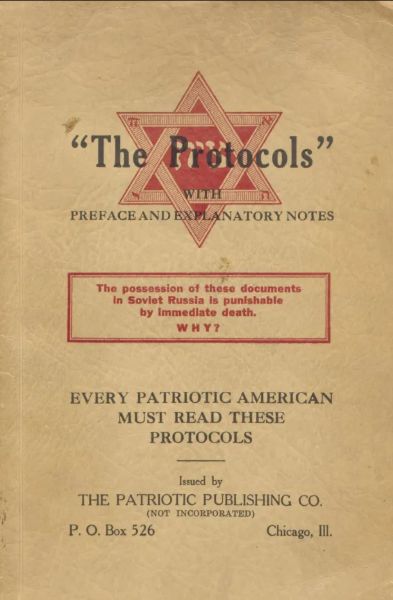
This is all a modern repackaging of “The Protocols of the Elders of Zion” and other classics of antisemitic propaganda.
How is it used?
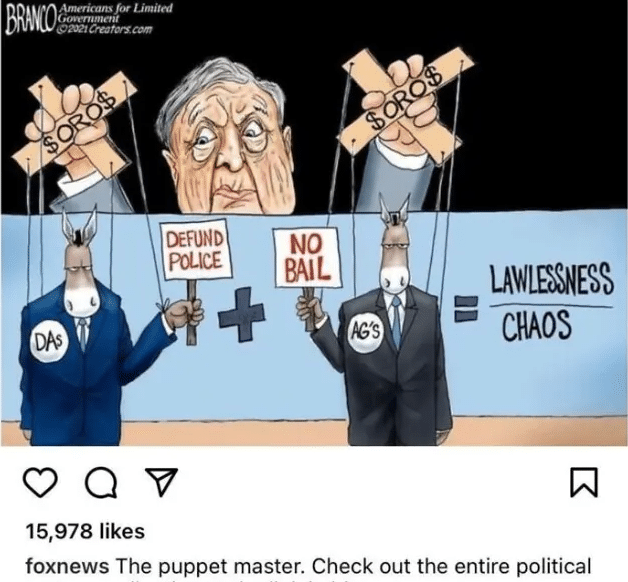
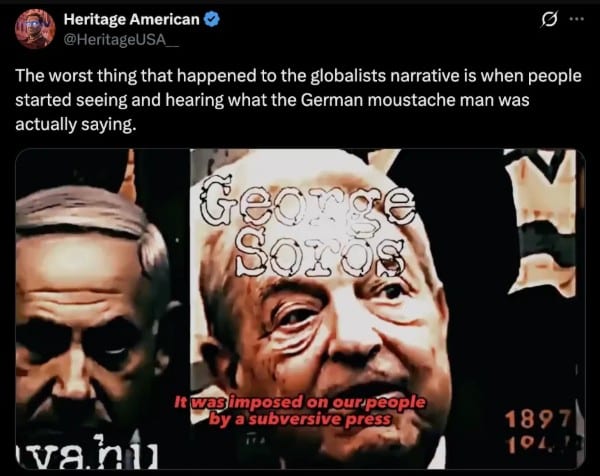
There are a few common ways this one pops up. The old Nazi propaganda images depicting Jews as an octopus or a puppet master manipulating industries is the most clear-cut version. In modern times, you’ll also see Jewish figures or families (Soros, Rothschild, etc.) being accused of grand conspiracies like controlling immigration policy to cause an influx of brown people to “replace” white Christians or funding entire protest movements or manipulating election results or controlling the weather via space lasers.
The trope works by taking a topic some people are opposed to (campaign finances, activist movements, the job market, and again, seriously, the weather) and then laying an antisemitic conspiracy of Jewish manipulation over it to create a convenient scapegoat.
What is it?
The belief that major world events – wars, financial crashes, pandemics, elections, the existence of processed food – are secretly orchestrated by a shadowy cabal of Jews pulling strings behind the scenes. These global conspiracies imply Jews (or Israel) control the media, the government, the banks, and any industry the conspirator thinks is doing something evil. It doesn’t matter if Occam’s Razor, tangible proof, or plain old common-sense point to actual causes by political, economic, or societal structures. To them, it’s always the Jews.
This is all a modern repackaging of “The Protocols of the Elders of Zion” and other classics of antisemitic propaganda.
How is it used?
There are a few common ways this one pops up. The old Nazi propaganda images depicting Jews as an octopus or a puppet master manipulating industries is the most clear-cut version. In modern times, you’ll also see Jewish figures or families (Soros, Rothschild, etc.) being accused of grand conspiracies like controlling immigration policy to cause an influx of brown people to “replace” white Christians or funding entire protest movements or manipulating election results or controlling the weather via space lasers.
The trope works by taking a topic some people are opposed to (campaign finances, activist movements, the job market, and again, seriously, the weather) and then laying an antisemitic conspiracy of Jewish manipulation over it to create a convenient scapegoat.
What’s the real-world impact?
Claims about Jewish control of the word is the ideological foundation of so much historical Jewish persecution. It inspired pogroms, and the Nazi Party used it to build support for their policies.
And it’s not just historical. This framework has been proven deadly very recently. The Pittsburgh Tree of Life synagogue shooter’s 2018 manifesto invoked this exact “hidden hand” framing about Jewish-orchestrated migration – also known as the Great Replacement Theory – before he murdered 11 people.
Red Flag #2. Collapsing “Israel,” “Zionists,” and “Jews” Into One Entity
What is it?
The erasure of distinctions between a government (Israel), a political belief (Zionism), and a cultural or religious identity (Jewishness). Purveyors of this trope treat these identifiers as interchangeable so that criticism of one becomes license to target all three.
How is it used?
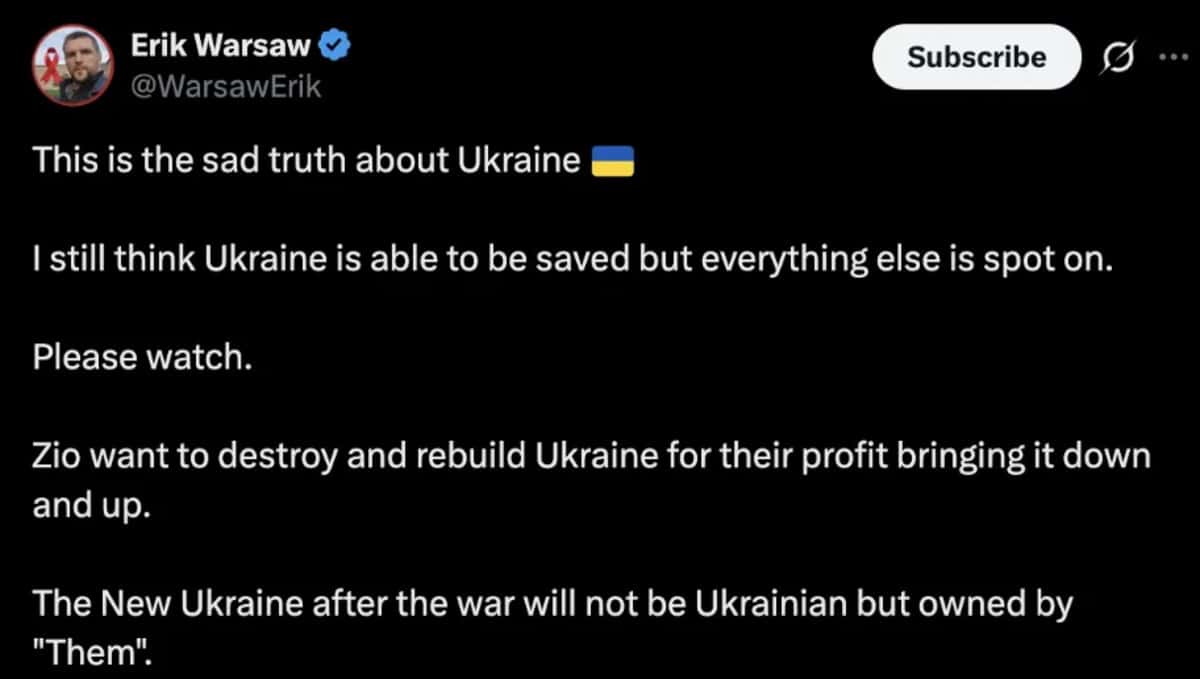
There are a few common ways we’ve seen this used recently. One is using “Zionist” as a sanitized substitute for “Jew.” Take, for example, people using the term “Zio.
What is it?
The erasure of distinctions between a government (Israel), a political belief (Zionism), and a cultural or religious identity (Jewishness). Purveyors of this trope treat these identifiers as interchangeable so that criticism of one becomes license to target all three.
How is it used?
There are a few common ways we’ve seen this used recently. One is using “Zionist” as a sanitized substitute for “Jew.” Take, for example, people using the term “Zio.
Popularized by David Duke, this is a term that’s either used on its own or as a prefix to other words like “Zio-media” or “Zio-occupied.” While some of the modern users of the term may not intend it to refer to Jews, its popularity in the current political discourse has given cover for antisemites to use it as a slur against Jews (as Duke originally intended).
You’ll also often see reference to “ZOG” or “Zionist Occupied Government” used in online spaces to claim Zionists have infiltrated the government to control the populace. This specific usage dates back to the 70s in neo-Nazi and white supremacist circles and has had a recent resurgence in anti-Israel online communities.
Another place this trope shows up is when Jewish individuals or institutions are held responsible for Israeli government decisions they had no role in and often didn’t support. Jewish restaurants, synagogues, schools, and individuals have been attacked and harassed at increasing levels for years under the guise of opposing Israel and/or Zionism. But let’s be honest, drawing a swastika on a deli isn’t legitimate criticism of Netanyahu’s coalition, Israel’s actions in Gaza, or West Bank settlement policy.
What’s the real-world impact?
We’ve witnessed ordinary Jewish people become proxy targets for geopolitical anger. Synagogues being vandalized and attacked and students being harassed have earned national attention. For example, the car ramming at Temple Israel in Michigan happened because the attacker blamed Jews for an Israeli airstrike that killed members of his family in Lebanon.
Red Flag #3: Dual-Loyalty/Disloyalty Accusations
What is it?
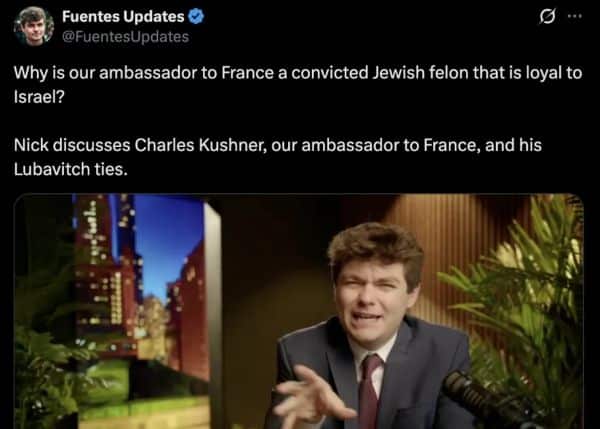
The insinuation that Jews pledge their allegiance to Israel (or a global Jewish entity) rather than to their own country. This trope is used to imply – or, in the case of the sitting president of the United States, claim directly that – Jews are disloyal to their country and cannot be trusted.
Interestingly, the dual loyalty trope predates the State of Israel by hundreds of years. Instead of allegiance to the State of Israel, it was allegiance to a secret global Jewish agenda. The core concept is that someone’s Jewishness makes them inherently suspect.
How is it used?
Everyone from elected officials to everyday folks across the political and demographic spectrum get accused of disloyalty.
What is it?
The insinuation that Jews pledge their allegiance to Israel (or a global Jewish entity) rather than to their own country. This trope is used to imply – or, in the case of the sitting president of the United States, claim directly that – Jews are disloyal to their country and cannot be trusted.
Interestingly, the dual loyalty trope predates the State of Israel by hundreds of years. Instead of allegiance to the State of Israel, it was allegiance to a secret global Jewish agenda. The core concept is that someone’s Jewishness makes them inherently suspect.
How is it used?
Everyone from elected officials to everyday folks across the political and demographic spectrum get accused of disloyalty.
Famously, President Trump has stated (repeatedly) that Jews who vote for Democrats are “very disloyal.” And whenever you see a politician referred to as Israel-first or bought and paid for by Netanyahu or as Israel’s puppet or any number of descriptions of Israeli control of an American Jew, it’s evoking this trope.
What’s the real-world impact?
This trope is meant to push Jews out of political participation by making their Jewishness itself a liability. This is similar to absurd accusations about Arab-Americans trying to impose Sharia Law in the US. The goal is to deny a specific group of Americans agency in order to remove them from participating in politics.
Red Flag #4: Coded Language
What is it?
The use of sanitized code words, numbers and symbols as stand-ins for overt antisemitic messaging. This allows the speaker to subvert content filters on social media while also maintaining plausible deniability.
How is it used?
We at the Nexus Project have written extensively about coded symbols. See our Field Guide for Antisemitic Comment Sections for an initial primer.
Whether it’s common terms like “globalists” and “cosmopolitan elites,” typographic markers like triple parentheses around names a.k.a “(((echoes))),” numeric codes like “1488,” or symbols like the juice box emoji, these dog whistles and rallying calls let speakers talk about antisemitic topics without saying “Jewish” directly.
What is it?
The use of sanitized code words, numbers and symbols as stand-ins for overt antisemitic messaging. This allows the speaker to subvert content filters on social media while also maintaining plausible deniability.
How is it used?
We at the Nexus Project have written extensively about coded symbols. See our Field Guide for Antisemitic Comment Sections for an initial primer.
Whether it’s common terms like “globalists” and “cosmopolitan elites,” typographic markers like triple parentheses around names a.k.a “(((echoes))),” numeric codes like “1488,” or symbols like the juice box emoji, these dog whistles and rallying calls let speakers talk about antisemitic topics without saying “Jewish” directly.
What’s the real-world impact?
This coded language has proliferated in far-right online spaces on forums like 4chan, Reddit, X, Instagram and others. And these are common in political extremes on both the right and left. The biggest danger of code words is how quickly they spread on social media platforms and infiltrate the modern lexicon. These terms normalize the conspiracies among audiences who might reject the same idea if the speaker were to be forthright and just say “Jews.”
Red Flag #5: Recycled Blood Libel
What is it?
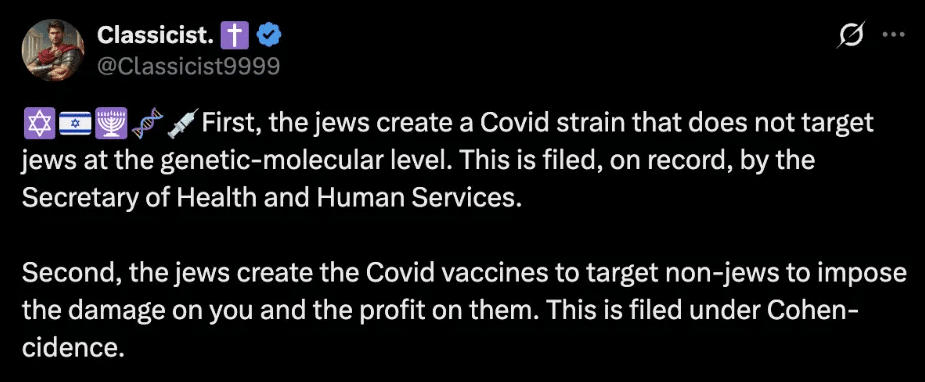
The repackaging of medieval antisemitic myths that accuse Jews of secret plots to harm non-Jews via violent rituals, spreading disease, or other such means. This has been used since ancient times, but the modern understanding of the term comes from a medieval claim that Jews used murdered Christian children’s blood to make Passover matzah.
What is it?
The repackaging of medieval antisemitic myths that accuse Jews of secret plots to harm non-Jews via violent rituals, spreading disease, or other such means. This has been used since ancient times, but the modern understanding of the term comes from a medieval claim that Jews used murdered Christian children’s blood to make Passover matzah.
How is it used?
There are plenty of modern antisemites who deploy blood libels, including social media claims blaming Jewish communities for orchestrating COVID-19 for financial and personal gain. There are also unfounded and dangerous claims that Israeli authorities murder Palestinians for the purpose of stealing organs for transplants for Jews.
The goal is to paint Jews as bloodthirsty threats to public health and public safety. This then paints antisemitism as a means of self-preservation rather than a form of hate.
It’s worth noting that the term “blood libel” is often misapplied and has been weaponized for political impact. Some have made the argument that using the term “genocide” to refer to Israel’s actions in Gaza is a modern blood libel. The debate over the use of the term “genocide” is fine. But the implication that this labeling of Israeli government actions is actually a conspiracy about Jewish ritual harm is unfounded and makes it harder to use the term to describe actual blood libels.
What’s the real-world impact?
Blood libel tropes are used to foment distrust and fear of Jews and have historically preceded waves of violence against Jewish communities.
Red Flag #6: Holocaust Denial and Distortion
What is it?
The repackaging of medieval antisemitic myths that accuse Jews of secret plots to harm non-Jews via violent rituals, spreading disease, or other such means. This has been used since ancient times, but the modern understanding of the term comes from a medieval claim that Jews used murdered Christian children’s blood to make Passover matzah.
How is it used?
White nationalist and neo-Nazi influencers use Holocaust denial and minimization constantly in their recruitment strategy. Groups like the Goyim Defense League use it as an example of Jewish dishonesty, implying that if Jews would lie about 6 million people being murdered, they’ll lie about anything. Once relegated to the fringes of politics and society, this belief is sadly becoming increasingly prevalent, including by young political leaders like the President of the New York Young Republicans Club.
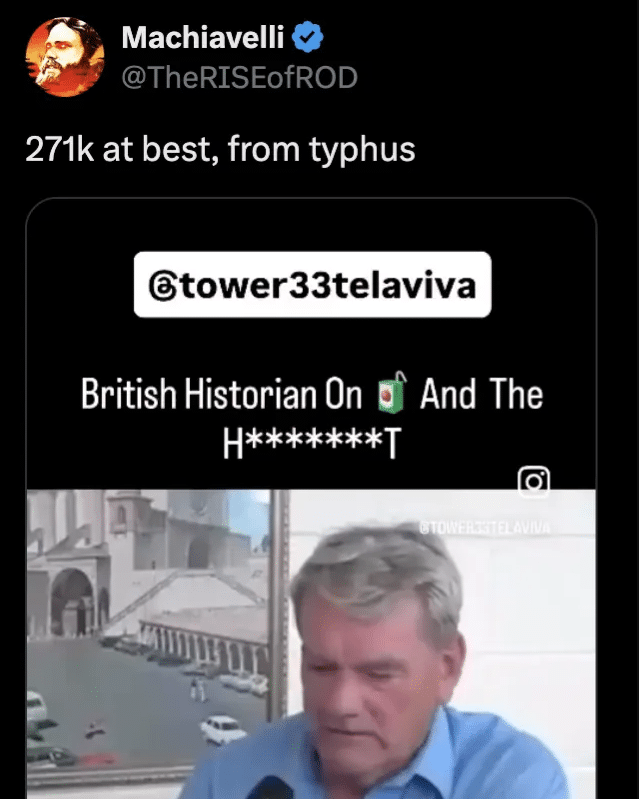
On social media, you’ll often see comments with some variation of the number 271,000. This figure, a fiercely underreported Jewish death toll based on a bad-faith reading of Holocaust scholarship and record keeping, is used in replies to content featuring Jews to claim Jews exaggerated the number killed by the Nazi regime.
What is it?
The repackaging of medieval antisemitic myths that accuse Jews of secret plots to harm non-Jews via violent rituals, spreading disease, or other such means. This has been used since ancient times, but the modern understanding of the term comes from a medieval claim that Jews used murdered Christian children’s blood to make Passover matzah.
How is it used?
White nationalist and neo-Nazi influencers use Holocaust denial and minimization constantly in their recruitment strategy. Groups like the Goyim Defense League use it as an example of Jewish dishonesty, implying that if Jews would lie about 6 million people being murdered, they’ll lie about anything. Once relegated to the fringes of politics and society, this belief is sadly becoming increasingly prevalent, including by young political leaders like the President of the New York Young Republicans Club.
On social media, you’ll often see comments with some variation of the number 271,000. This figure, a fiercely underreported Jewish death toll based on a bad-faith reading of Holocaust scholarship and record keeping, is used in replies to content featuring Jews to claim Jews exaggerated the number killed by the Nazi regime.
What’s the real-world impact?
Holocaust denial and distortion are designed to destroy historical memory and public understanding of the Nazi genocide of Jews during World War II. This makes the actual history harder to teach and easier to weaponize by bad-faith actors across the political spectrum.
So What Do I Do When I Encounter These?
Name the specific trope, not just “antisemitism.” Saying “that’s the hidden-hand conspiracy trope” and explaining how it’s being deployed is more persuasive and harder to dismiss than a general accusation. There is a phenomenon happening called “antisemitism fatigue,” which means people who have seen so many different things labeled as antisemitic think, “well, if everything is antisemitic, then the label doesn’t mean anything.” We can subvert this challenge by being specific and thorough in how we identify and label these antisemitic moments. Use it as a tool to educate the person on why what they said was wrong as opposed to simply saying it was wrong.
Don’t amplify it for them. Social media algorithms are designed to promote controversy and dissent. For example, on Instagram, the top comment on a post will always be the one with the most replies, not the one with the most likes. So a problematic comment with 100 replies calling it antisemitic will end up being seen much more. And a tweet on X with hundreds of replies and quote tweets is far more likely to be promoted because the platform thrives on engagement and argument. So instead, screenshot, report, or flag to platform moderators rather than quote-tweeting outrage which only serves to spread it further.
Lead with education, not punishment. A lot of people using these tropes genuinely don’t know they’re doing so. Immediately jumping to calling them an antisemite and deserving of public scorn isn’t productive. And in many cases, it causes that person – who otherwise may have been persuaded to change – to dig their heels in. Instead, offer your thoughtful rebuttal and explain why what they said is problematic and how they can still make their point without evoking antisemitic tropes. Using it as a teachable moment is more likely diffuse the situation and ensure that person doesn’t use the trope again in the future.